




AM 355 Stainless Steel (UNS S35500 / Alloy 355) | Alloy 355 / AMS 5547 / AMS 574

March 12, 2026 | Tags: Stainless, AMS, AM, Steel, UNS, S35500, Alloy, 5547, 5743, Properties,
AM 355,UNS S35500
AM 355,UNS S35500

AM355 stainless steel (UNS S35500) guide covering chemical composition, mechanical properties, AMS 5547, AMS 5743, ASTM standards, and aerospace uses.

What is AM 355,UNS S35500 grade steel?

AM 355 Stainless Steel (UNS S35500 / Alloy 355 / CarTech 355) – Properties, Standards, and Applications

In the world of high-performance aerospace materials, only a few stainless steels manage to balance high strength, corrosion resistance, and extreme temperature performance. One of those standout materials is AM 355 stainless steel, also known as UNS S35500, Alloy 355, Alloy 634, CarTech 355 Alloy, or Stainless Steel Grade 355.

Although the names may appear different, these designations essentially refer to the same precipitation-hardening stainless steel, produced and specified under different industrial standards and material specifications. Depending on the manufacturer, aerospace specification, or military standard being used, the alloy may appear under identifiers such as:

  • UNS S35500
  • AM 355 / AM355
  • Alloy 355 / Alloy 634
  • CarTech 355 Alloy
  • Stainless Steel Grade 355

It may also be governed by numerous engineering standards, including:

  • AMS 5547
  • AMS 5549
  • AMS 5743
  • AMS 5744
  • AMS 5780
  • ASTM A564
  • ASTM A579
  • ASTM A693
  • ASTM A705
  • SAE J467 (AM-355)
  • MIL-S-8840

Typical Applications

Due to its high strength-to-weight ratio and corrosion resistance, Alloy 355 (UNS S35500) is widely used in:

  • Aerospace components (landing gear, fasteners, structural parts)
  • Oil and gas industry (downhole tools, valves, fittings)
  • Marine engineering (propulsion components, seawater systems)
  • High-performance industrial equipment (pumps, shafts, gears)
  • Military and defense applications (weapon systems, vehicle components)

Products Form:

Chemical Composition

ElementMinimumMaximum
Chromium (Cr)15.016.5
Nickel (Ni)4.05.0
Molybdenum (Mo)2.53.25
Carbon (C)0.070.11
Manganese (Mn)-1.0
Silicon (Si)-1.0
Phosphorus (P)-0.04
Sulfur (S)-0.03
Nitrogen (N)0.050.10
Iron (Fe)Balance

Mechanical Properties

Alloy 355 exhibits an excellent combination of high strength, toughness and corrosion resistance, making it suitable for critical applications. Typical mechanical properties (in heat-treated condition) are listed below:

PropertyValueTest Standard
Tensile StrengthMin. 1034 MPa (150 ksi)ASTM E8
Yield Strength (0.2% Offset)Min. 862 MPa (125 ksi)ASTM E8
Elongation in 2 inchesMin. 12%ASTM E8
Hardness (Rockwell C)30 - 40 HRCASTM E18
Corrosion ResistanceResistant to atmospheric corrosion, mild acids, and saltwaterASTM G48

Physical Properties

Physical characteristics of Alloy 355 (UNS S35500) at room temperature:

Physical PropertyValueUnit
Density7.85g/cm³ (lb/in³: 0.283)
Melting Point Range1400 - 1450°C (2550 - 2640 °F)
Thermal Conductivity (at 20°C)15.1W/m·K (Btu/ft·h·°F: 8.73)
Specific Heat Capacity (at 20°C)460J/kg·K (Btu/lb·°F: 0.110)
Coefficient of Thermal Expansion (20-100°C)10.8×10⁻⁶ /°C (×10⁻⁶ /°F: 6.0)
Electrical Resistivity (at 20°C)0.78×10⁻⁶ Ω·m (microohm·cm: 78)

Heat Treatment

Alloy 355 is typically heat-treated using a precipitation hardening process to achieve optimal mechanical properties:

  1. Solution Annealing: Heat to 1040°C (1900°F), hold for 30 minutes, then air cool
  2. Precipitation Hardening: Heat to 482°C (900°F) for 4 hours, then air cool (H900 condition)
  3. Alternative Hardening: 510°C (950°F) for 4 hours (H950) or 538°C (1000°F) for 4 hours (H1000)

Thermal Properties

Alloy 355 maintains good mechanical properties at elevated temperatures, with the following key characteristics:

  • Continuous Service Temperature: Up to 315°C (600°F) for structural applications
  • Short-Term Service Temperature: Up to 427°C (800°F) for non-critical components
  • Creep Resistance: Maintains 80% of room-temperature strength at 260°C (500°F) for 10,000 hours
  • Oxidation Resistance: Resistant to scaling in air up to 538°C (1000°F) for intermittent exposure
  • Strength Retention:
    • 200°C (392°F): ~95% of room temperature tensile strength
    • 300°C (572°F): ~85% of room temperature tensile strength
    • 400°C (752°F): ~70% of room temperature tensile strength

Note: Precipitation hardening treatments (H900/H950/H1000) optimize high-temperature performance; avoid prolonged exposure above 540°C (1000°F) to prevent carbide precipitation.

Welding Properties

General Welding Characteristics

Alloy 355 is weldable with proper pre- and post-weld procedures, though its martensitic structure requires careful handling to avoid cracking and maintain mechanical properties:

Recommended Welding Methods

  • GTAW (TIG): Most preferred method for high-quality welds (use ERNiCrMo-3 filler metal)
  • GMAW (MIG): Suitable for production welding (use ER308L or ER316L filler metal)
  • SMAW (Stick): For field welding (use E308L-16 or E316L-16 electrodes)
  • PAW (Plasma Arc Welding): For precision thin-section welding

Critical Welding Procedures

  1. Pre-Weld Preparation:
    • Clean all surfaces (remove oil, grease, oxides) within 25mm (1 inch) of weld joint
    • Preheat to 150-200°C (300-390°F) to reduce hydrogen cracking risk
  2. Welding Parameters:
    • Maintain interpass temperature below 200°C (390°F)
    • Use low heat input (1.5-2.5 kJ/mm) to minimize grain growth
    • Travel speed: 100-150 mm/min (4-6 in/min)
  3. Post-Weld Heat Treatment:
    • Stress relief: 620-675°C (1150-1250°F) for 1-2 hours, air cool
    • Re-hardening: Solution anneal at 1040°C (1900°F) + precipitation harden at 482°C (900°F)

Caution: Avoid oxy-fuel welding due to high carbon pickup risk; do not weld in the H900 condition (fully hardened state).

Machining Properties

Machinability Rating

Alloy 355 has a machinability rating of 50-60% compared to AISI 1212 steel (100% baseline) when in the annealed condition:

Recommended Machining Practices

  • Annealed Condition (softest state):
    • Brinell Hardness: 200-220 HB
    • Cutting speed: 60-90 m/min (200-300 ft/min) for turning/milling
    • Feed rate: 0.10-0.20 mm/rev (0.004-0.008 in/rev)
    • Depth of cut: 2-4 mm (0.08-0.16 in)
  • Hardened Condition (H900):
    • Use carbide tools with positive rake angles
    • Cutting speed: 30-45 m/min (100-150 ft/min)
    • Use high-pressure coolant (emulsion type) to reduce tool wear

Fabrication Considerations

  • Forming: Cold forming possible in annealed condition; warm forming (150-200°C) for complex shapes
  • Grinding: Use aluminum oxide abrasives; avoid excessive heat build-up
  • Polishing: Achieves 150-200 grit finish with standard stainless steel polishing techniques
  • Heat Treatment After Fabrication: Stress relief at 620°C (1150°F) for 1 hour before final hardening

What is AM 355,UNS S35500 equivalent to?

International equivalents and similar grades to Alloy 355 (UNS S35500):

Standard Grade Designation Similarity Level Key Notes
US (UNS) S35500 (634), S35750 (AM 350) Direct Equivalent / Very Similar AM 350 has slightly lower molybdenum content
ASTM ASTM A564 Grade 634 Direct Equivalent Identical chemical composition
AMS AMS 5547, AMS 5743 Direct Equivalent Aerospace specification for Alloy 355
European (EN) X5CrNiMoCuNb16-4 (1.4542) Similar PH stainless steel with comparable properties
Japanese (JIS) SUS630 (17-4 PH) Similar 17-4 PH has higher chromium, lower molybdenum
British (BS) 630S16 (17-4 PH) Similar Precipitation hardening stainless steel

Note: Always verify chemical composition and mechanical properties before substituting grades for critical applications.

Our provides:

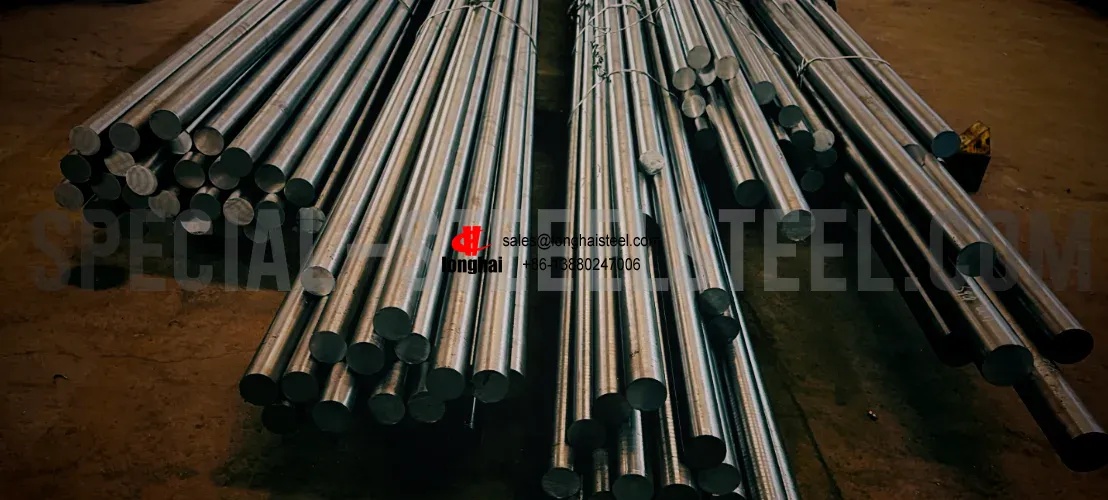
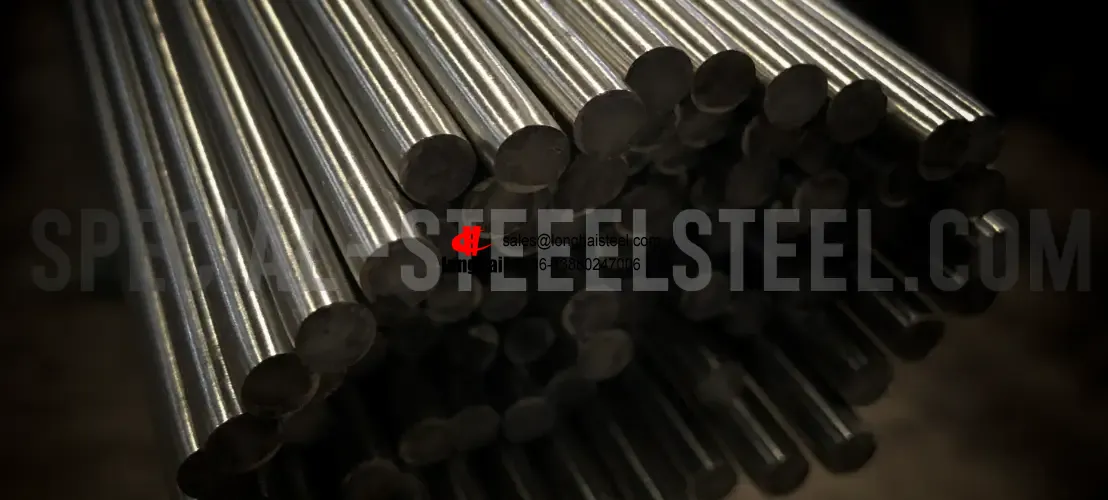
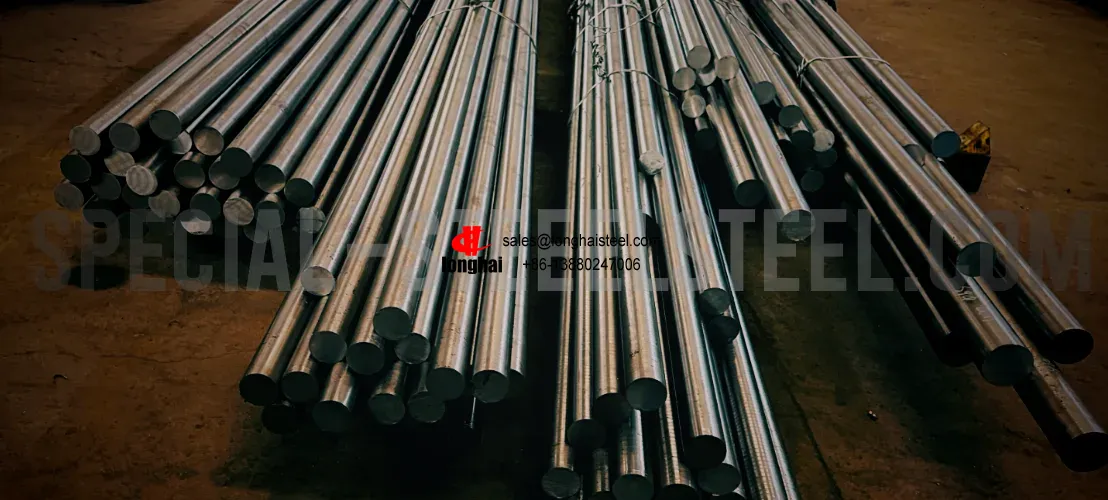
Round Bars

Hot rolled coils & plates

Cold rolled coils and sheets

Square-bars

Flat bars

Hollow bars

Share on:
Back to previous page